Portfolio Drawings:
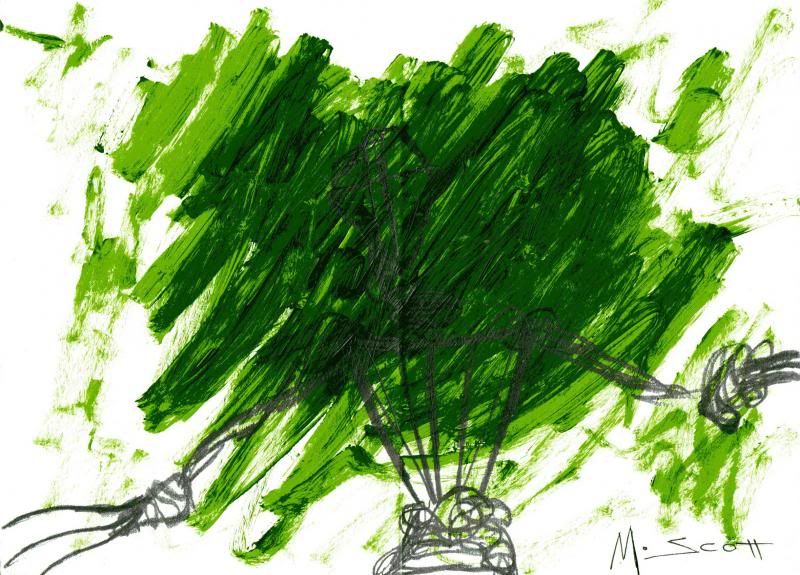
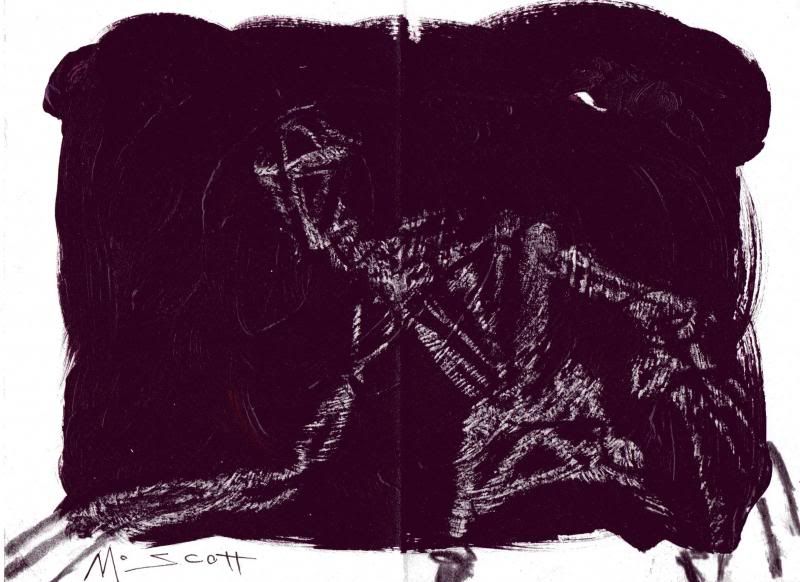
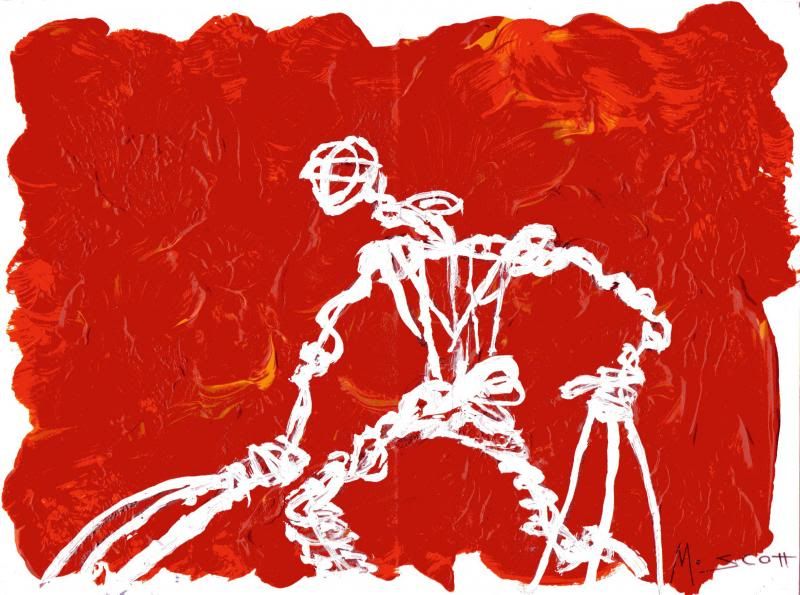
Various drawn interpretations to the wire sculpture Langsuir (2010).
Top to bottom: marker pen, graphite, chalk and tippex.
Backgrounds on all applied by acrylic paint.
Just as I had (slightly) experimented with reinterpreting the forms of my wire sculptures from the 'Body & Form' project, I decided to produce various drawings/paintings to further explore media.
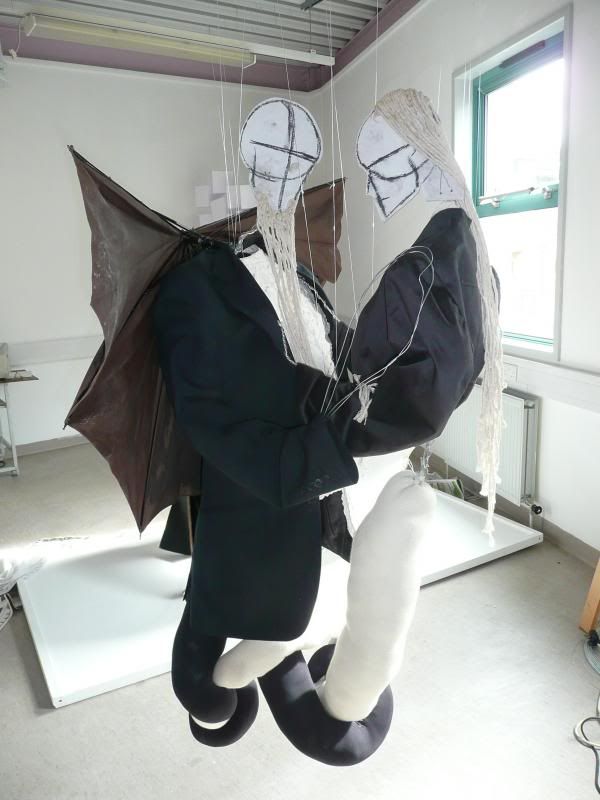
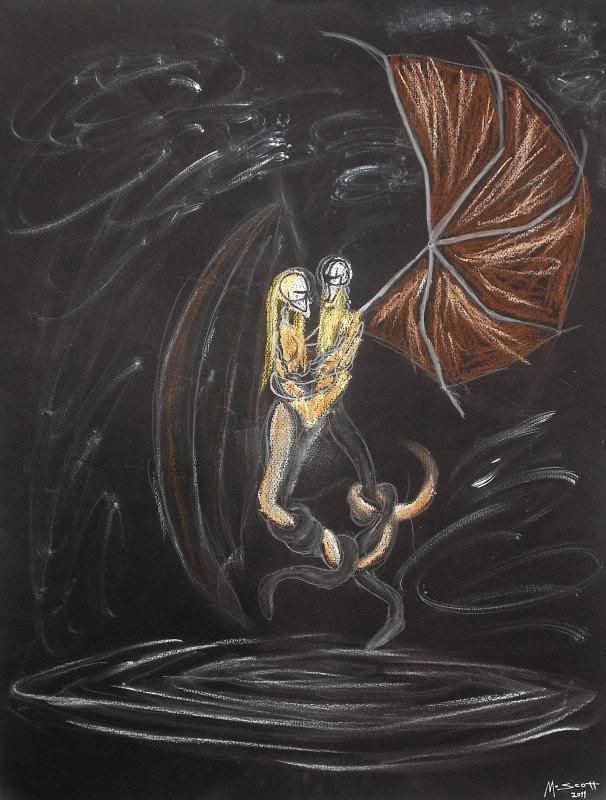
Langsuir/Manananggal (2011)
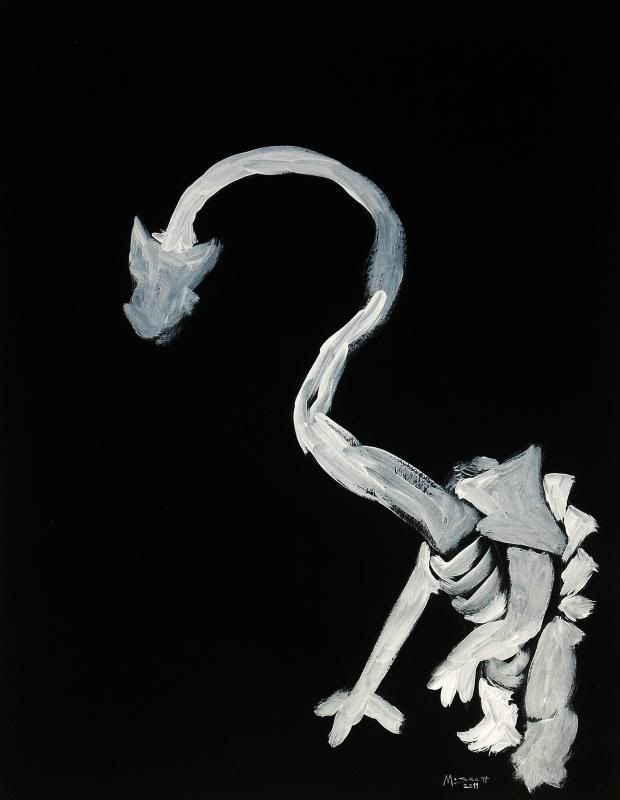
Silver Centaur (2011)
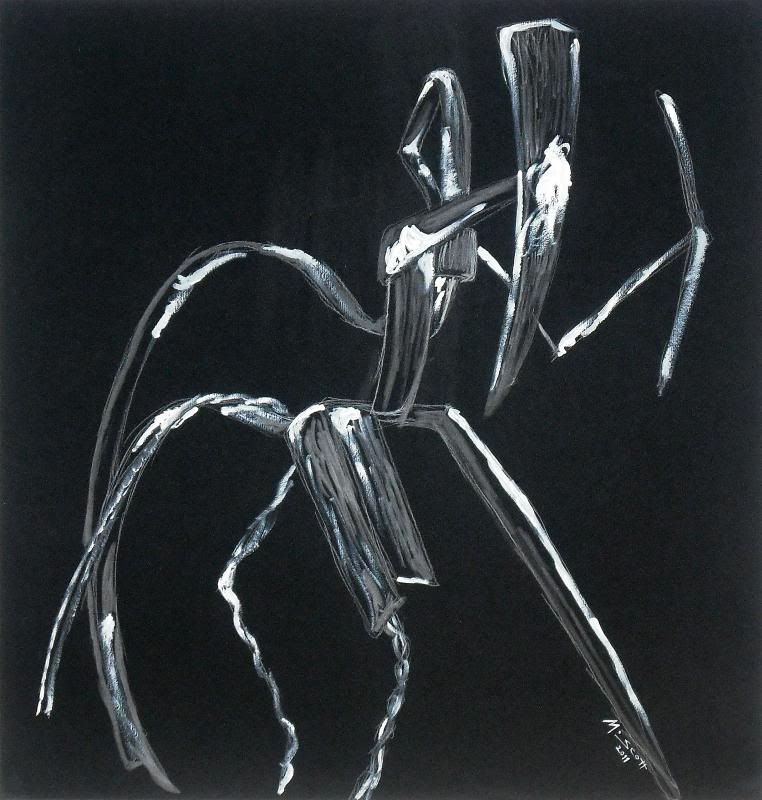
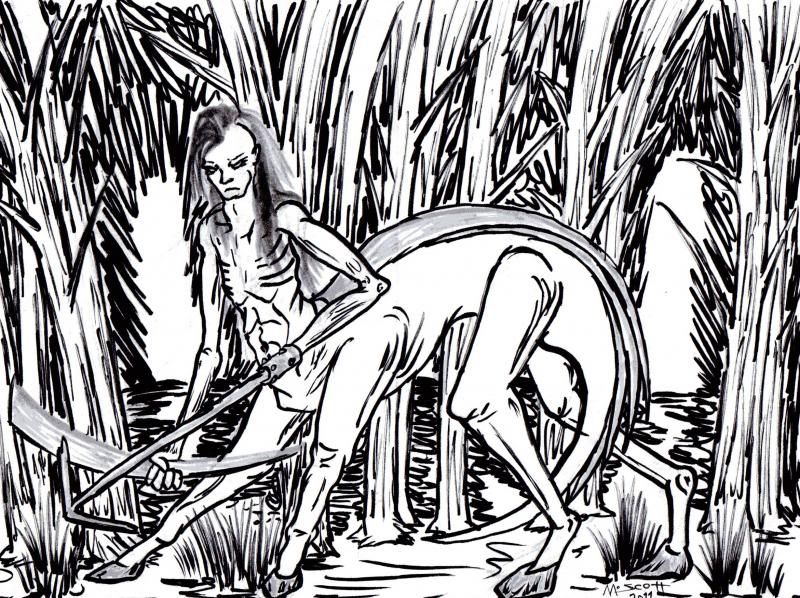
Although the above silver marker and white acrylic was a more literal presentation of the original sculpture, I took a significantly different approach with the brushpen drawing. I tried to play around with the sculpture's form and appropriately translate it as part of the creature's anatomy. Because of the curving of
Siilver Centaur's body, following the lines of it made the figure appear rather alien in comparison to the typical depiction that may be seen of a centaur, certainly compared to what you'd expect to see from any major film, for instance.
Centaur the Sagittarius (2011)
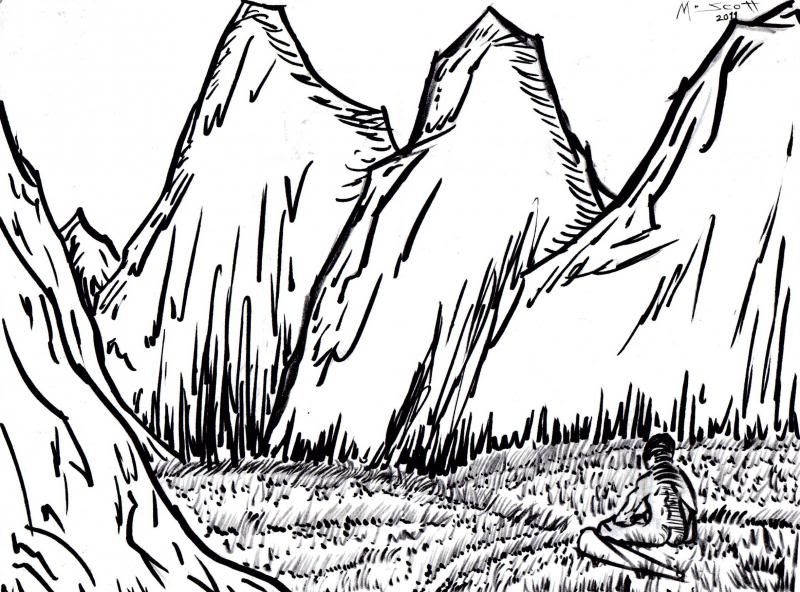
Bullman's Lair (2011)
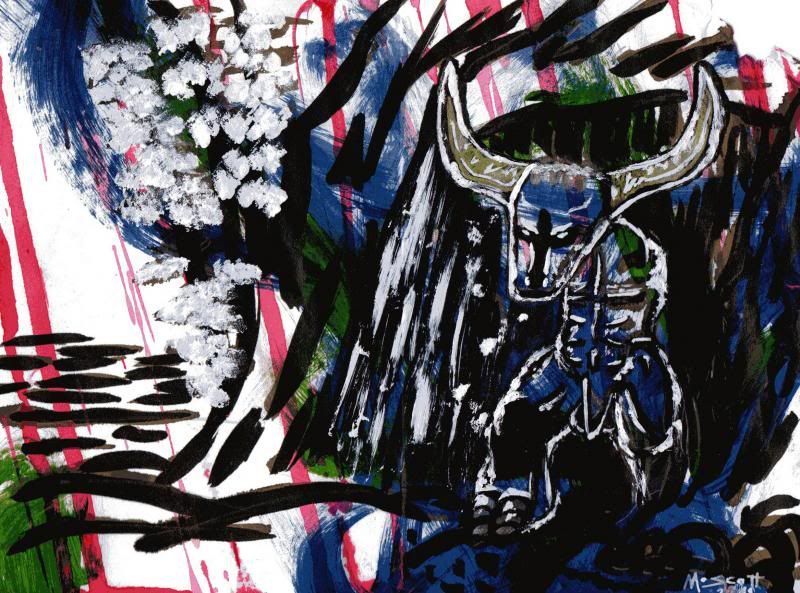
Bullman's Lair was definately the more experimental of any of my Japanese-inspired drawings, not only was the drawing done on a piece of card taken from
Langsuir/Manananggal but was also the only one 'drawn' using an actual brush and ink. I decided the bring out the details on the Bullman's musculature using tippex.
Lernaean Hydra (2011)
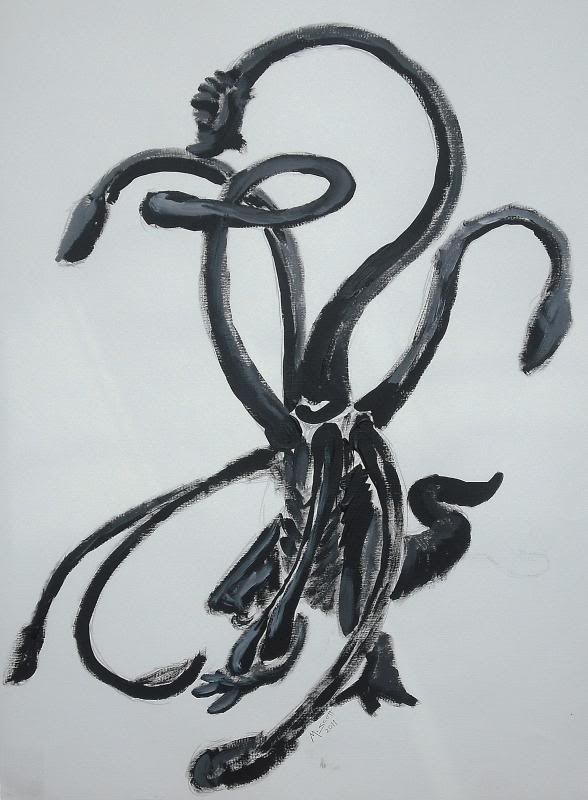
I very much liked how simplified the original form of the Hydra piece was so I kept close to that using minimal colours to create another abstracted representation of the creature. With the bulk of its body being black acrylic, I used grey to highlight parts of its body, the necks in particular. I like to think the grey helps give a little more sense of movement from the creature, perhaps more so than the sculpture.
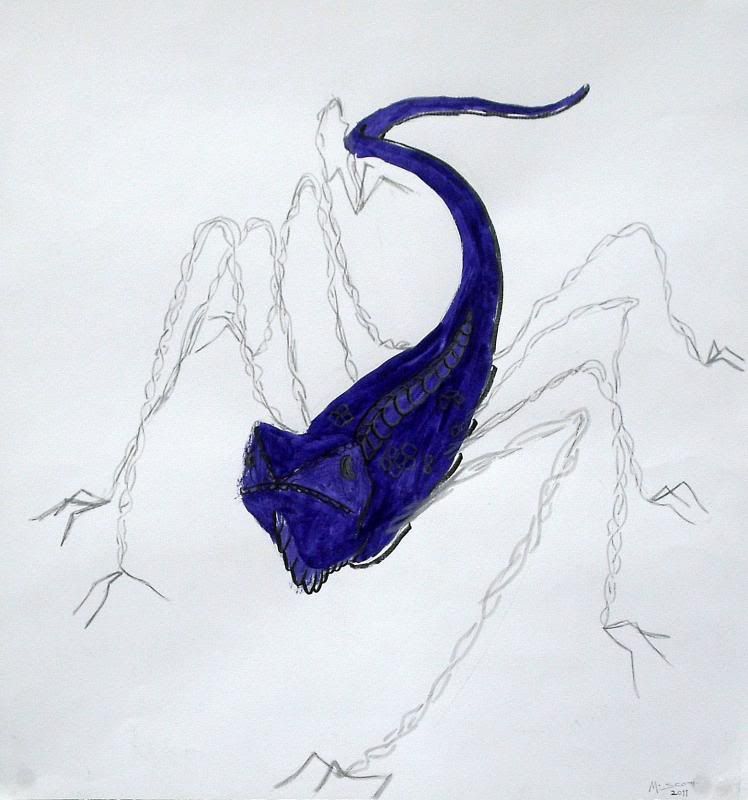
Basilisk - Purple Body (2011)
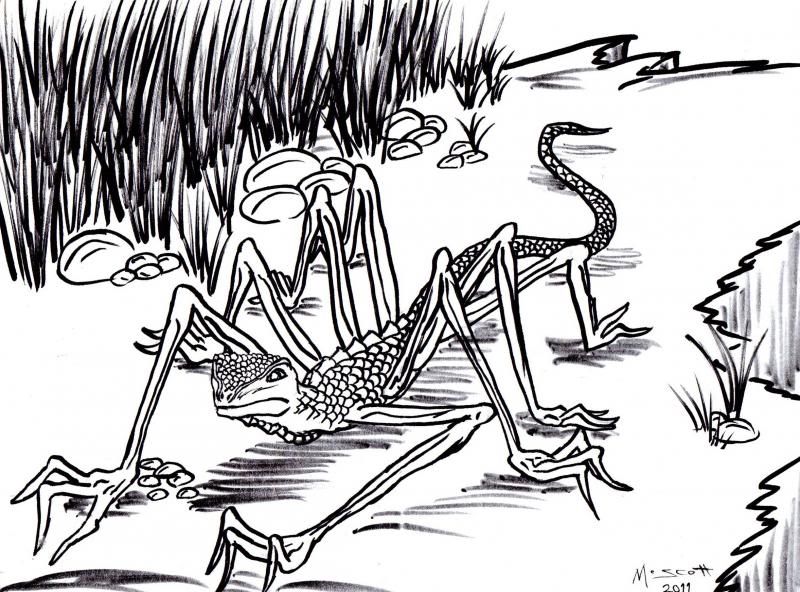
For both depictions of the Basilisk sculpture, I hoped to create the sense of movement suggested by its body, given the comment received with regards to the original piece. At times, I wonder if the legs can be difficult to distinguish with the ink/marker pen drawing as there isn't exactly any apparent lines to set the thin legs apart from each other.
Basilisk (2011)
Decomposition (2011)
Decomposition was actually produced after all other ink/paint based works, as a more literal presentation of
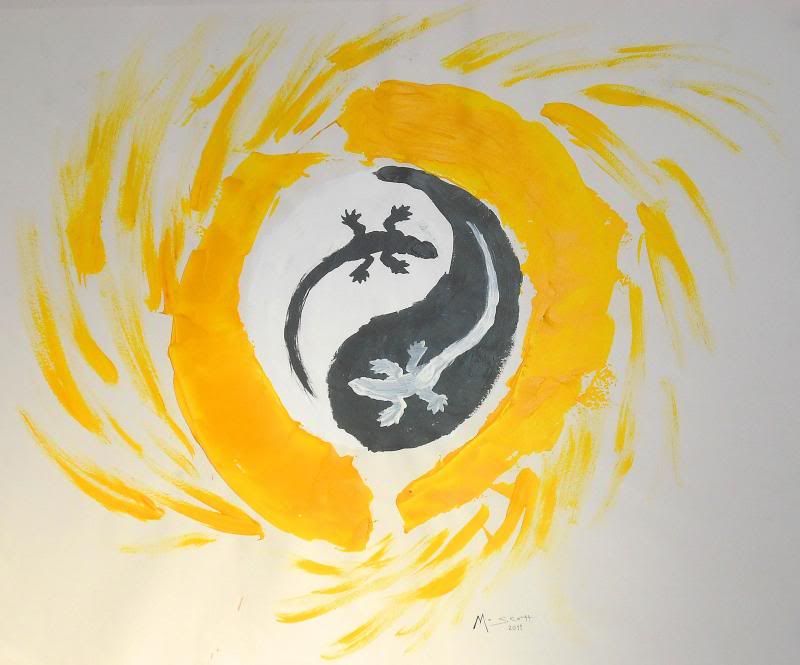
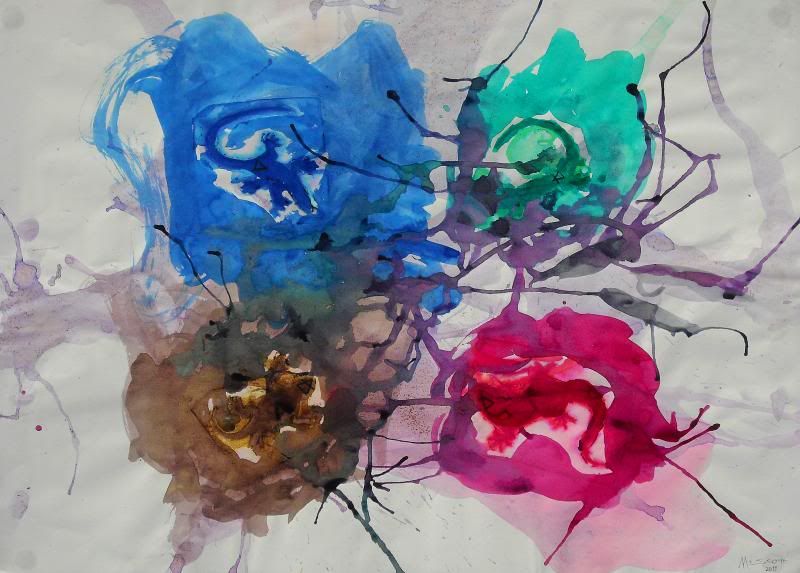
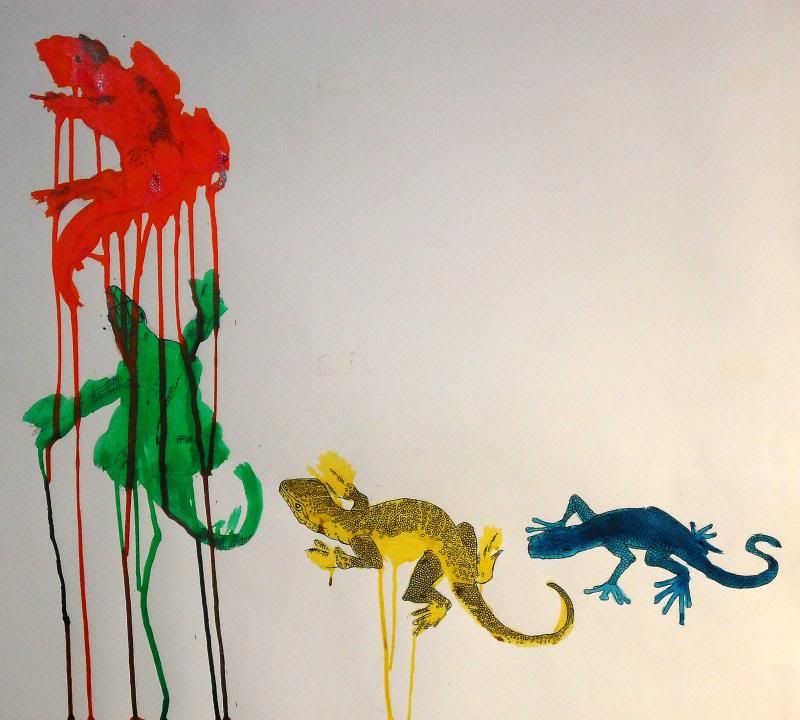
Life Cycle of Salamanders. The other artwork relating to Salamanders, however, I consider more interesting, more so due to how they explore the Salamander's relation as a pivotal icon within alchemy and potentially symbolism itself.
Indestructible in Fire (2011)
Salamanders (2011)
Lizards in Alchemy (2011)
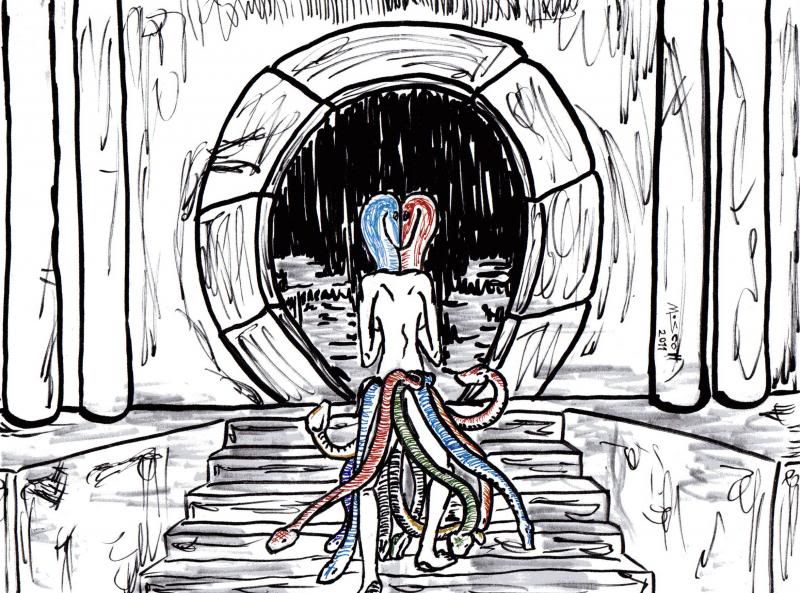
Coatlicue, the Serpent Goddess Enters (2011)
Because of how much the rubber snakes used for the sculpture stood out from the Indian ink black figure, I decided to incorporate colour for detail on the snakes of Coatlicue for this drawing. The layout of the image, with Coatlicue ascending what appears to be the staircase of a temple of some sort, was actually inspired by a scene called
The Emerald Altar, made by fantasy artist
Luis Royo.
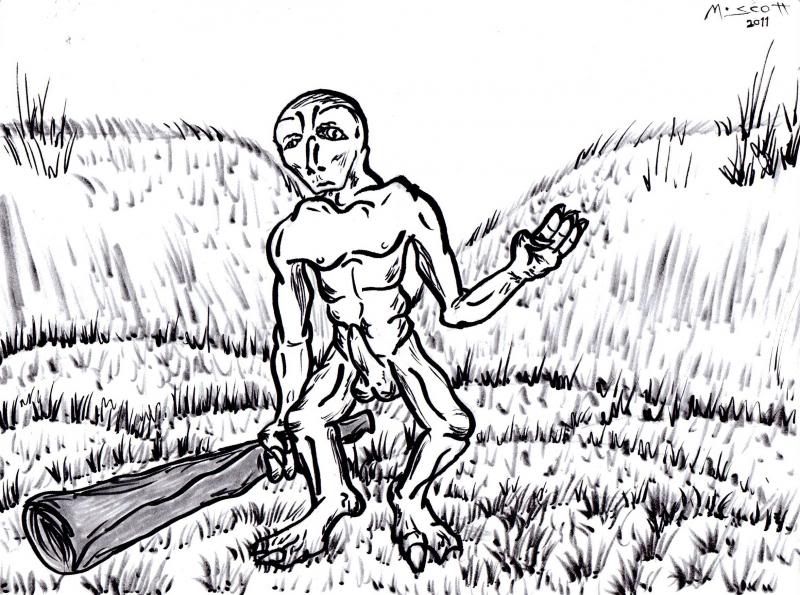
The Dagda (2011)
For the drawings based on my
Dagda Idol I ended up producing two images. The one shown above was to emphasise on the details of the sculpture put into drawing. Various details to Dagda's anatomy has been reinterpreated accordingly to their representation on the sculpture: the asymmetry of his eyes, shape of his left hand held out and simplified shape of the genitals, even the club has been drawn to refer to the scupture's club being a rolled sheet of metal.
Although I feel the drawing provides an interesting vision for a rarely recognised mythological figure, it is more than understandable how peers found my other image, more emphasising on its possible environment, was more welcoming.
The Dagda's Resting Valley (2011)
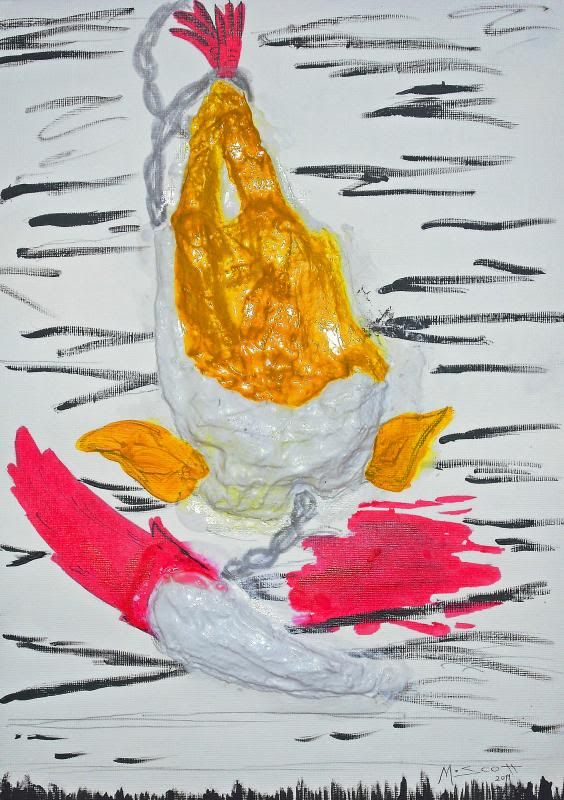
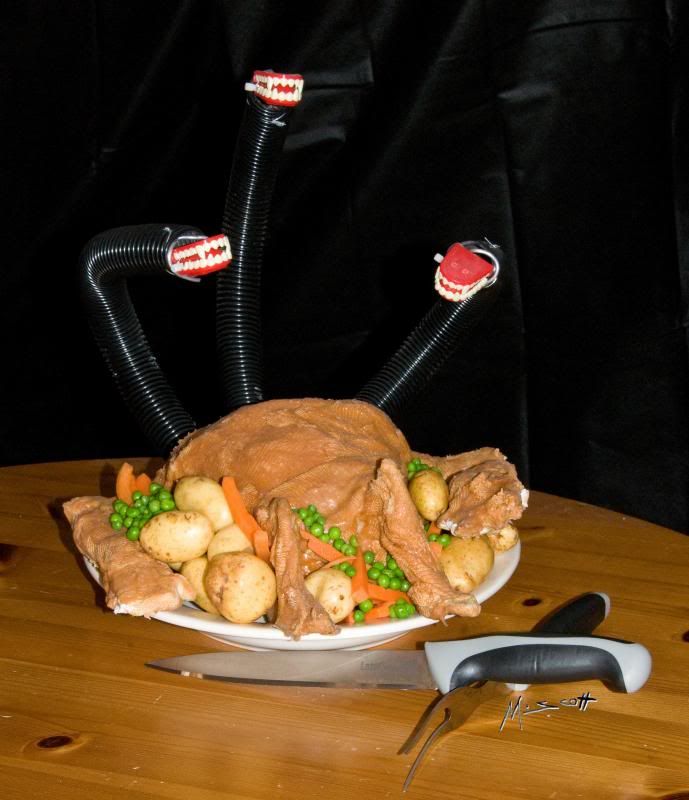
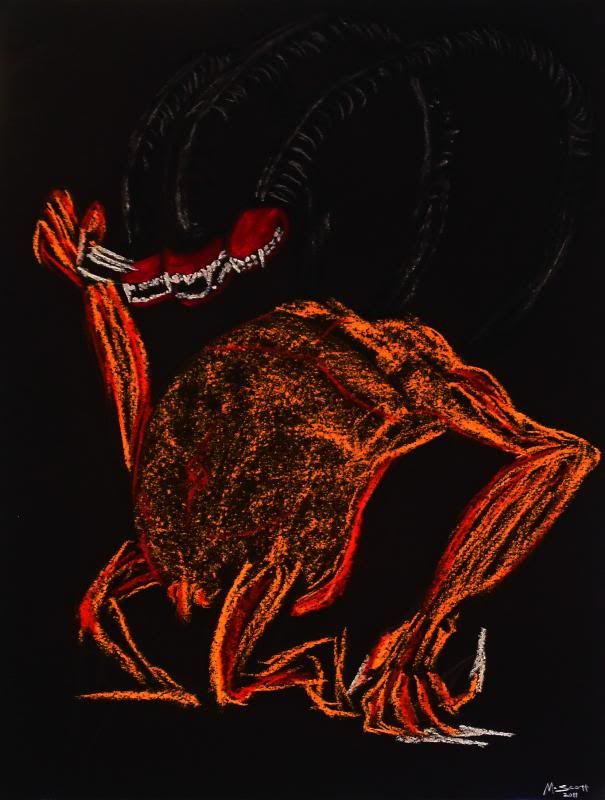
Untitled (KFCockatrice) (2011)
This picture for the sculpture
KFC (Kentucky Fried Cockatrice) was produced from a mix of ink, acrylic paint, mod-roc and marker pen. PVA glue was applied to both keep the mod-roc in place during presentation in my portfolio and give the body its gloss, not unlike the original sculpture.
I never created any drawn or painted re-imaginings of the Tsuchigumo sculpture, due to the lack of appeal gained from any people. However, it would certainly seem unnecessary to produce at least a brushpen depiction, on account of how the model sculpture itself was a reconstruction of scenes as shown in the sort of traditional Japanese artworks that inspired its conception.
Tsuchigumo no Sōshi Emaki (13th cen.), artist unknown.
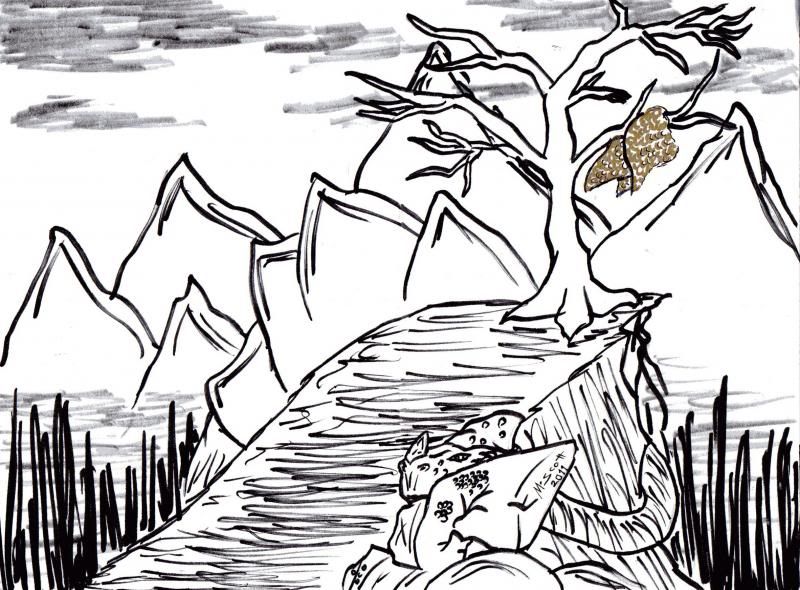
Colchion Dragon (2011)
Much like the painting for the Hydra sculpture, that of the Colchion Dragon was abstracted from most detail to the point I consider this more appealing to the chaotic coiling of
Lernaean Hydra. The brushpen drawing then served as a contrast in detail, attempting to develop detail similar to that of Japanese ink landscapes, and applying them to the Colchion Dragon to make it blend in with its surroundings. This was made to focus on the role of the dragon as a guardian, its presence easily concealed by its surroundings to catch those nearby off guard.
"
Dragons often protect treasure, perhaps representing the value of deep understanding to be found in the chthonic depths with which the dragon is also frequently associated."
-
The Oxford Companion to World Mythology by David Leeming
Colchion Dragon Guarding the Fleece (2011)
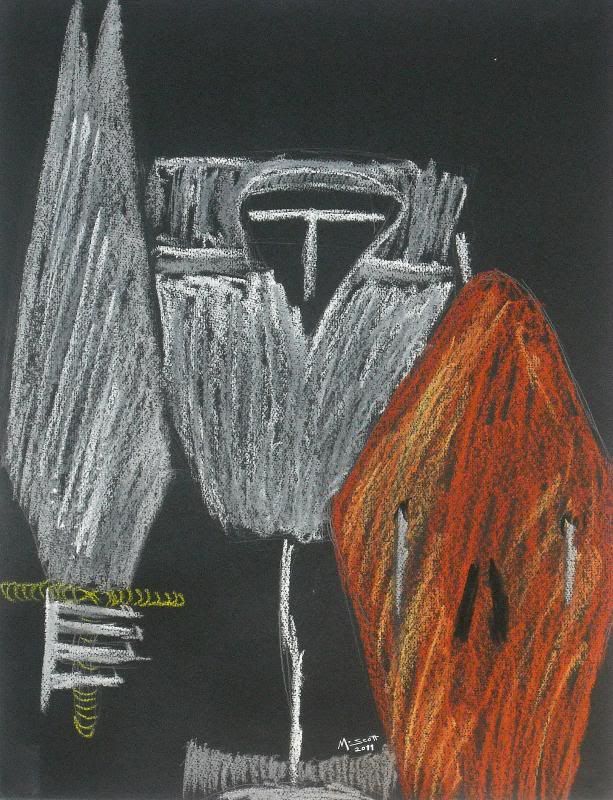
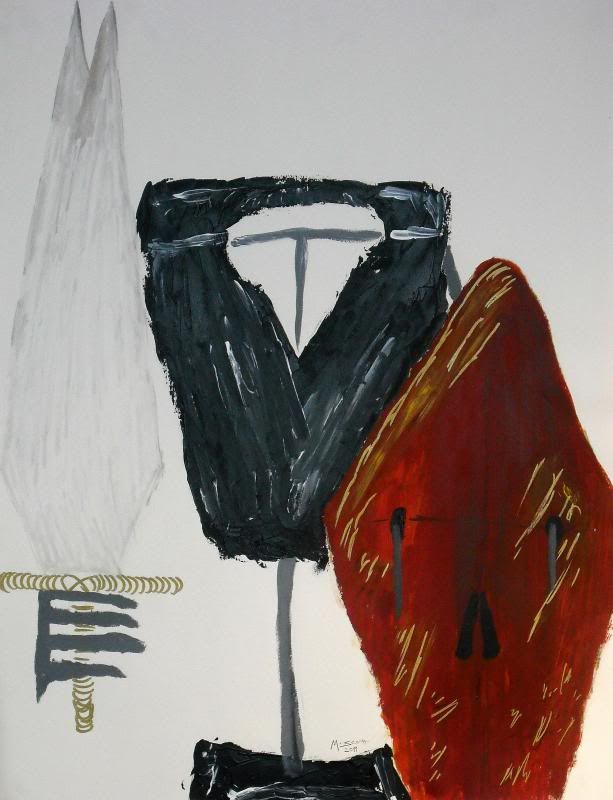
Dullahan, the Headless Sentry (2011)
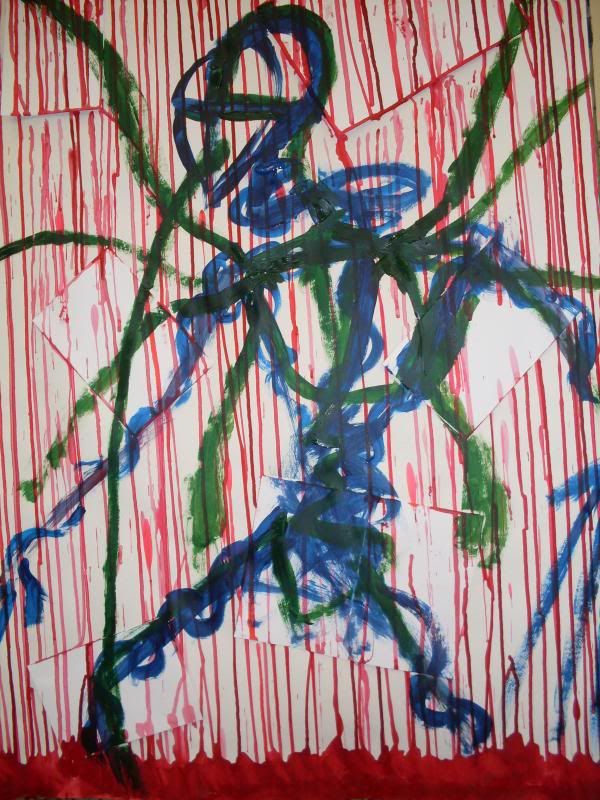
Admittedly, this concept was originally developed as an attempt to fill in space for my portfolio, on account of my urgent need to catch up for assessment purposes. The main idea was rather simplistic, like many other pieces shown here. I used different materials in different colours to produce two contrasting representations of the same figure.



.JPG)